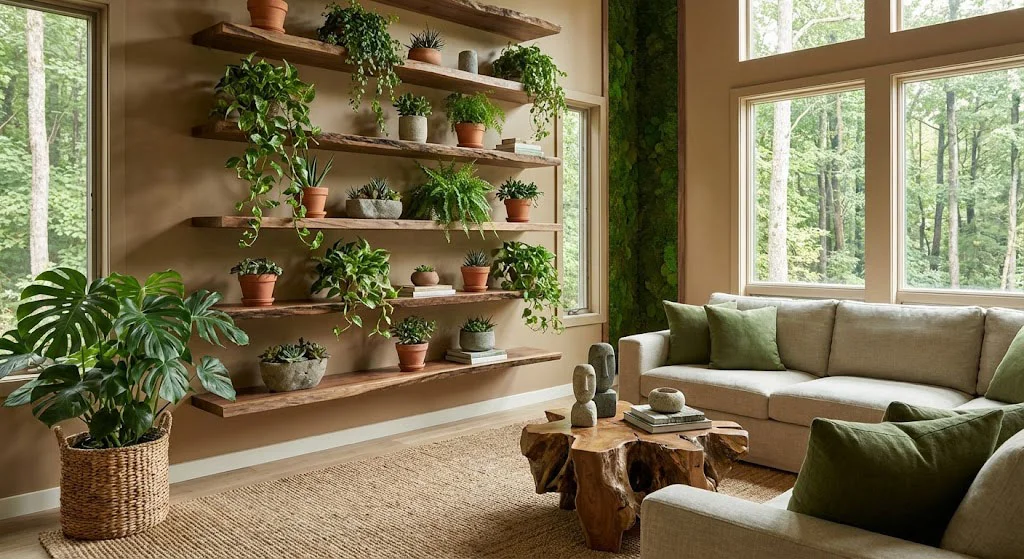
By 2026, the boundary between the “indoors” and “outdoors” has all but vanished in American interior design. As urban environments become more digitized and fast-paced, the home has evolved into a biological sanctuary, a place designed not just for shelter, but for restorative wellness. This movement, known as Biophilic Design, is centered on the innate human need to connect with nature.
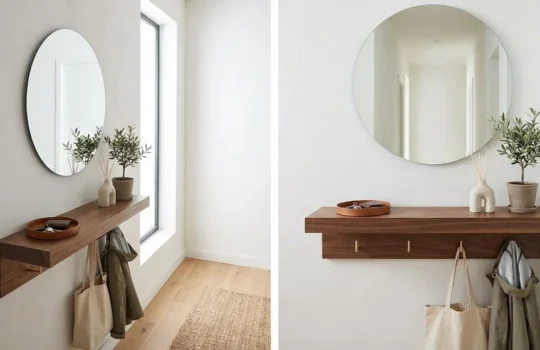
At the heart of this “living room revolution” is a simple yet powerful element: the thick floating wooden shelf. No longer just a place to store books, these heavy-duty, solid timber ledges have become the “architectural bones” of the vertical forest, allowing homeowners to bring the textures, scents, and life-affirming energy of the woods into their daily living spaces.
The Sensory Power of Raw Wood
Biophilic design is about more than just “adding plants.” It is about a multi-sensory engagement with natural materials. In 2026, the US market has seen a sharp decline in synthetic “wood-look” laminates in favor of authentic solid timber.
Why? Because humans are biologically hardwired to respond to the “fractal” patterns found in real wood grain. Studies have shown that simply looking at the complex, non-repeating lines of a Black Walnut or White Oak shelf can lower heart rates and reduce cortisol levels.
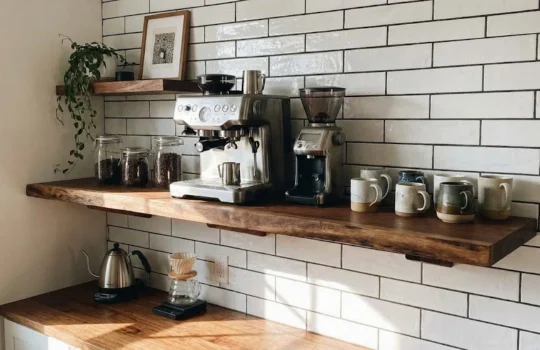
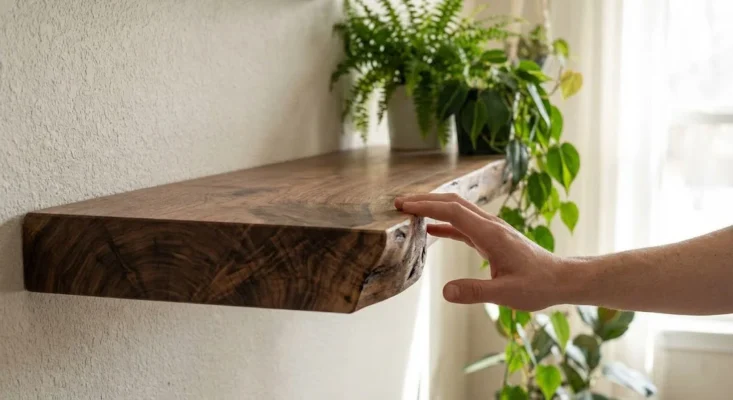
A thick floating shelf (2–3 inches) provides a tactile experience that a thin veneer cannot. The depth of the wood allows for a “Live Edge”—the natural, rugged contour of the tree—to be preserved. Touching the edge of a solid maple shelf as you walk through your living room is a grounding ritual, a physical reminder of the earth’s permanence in a digital world.
Engineering the “Vertical Jungle”
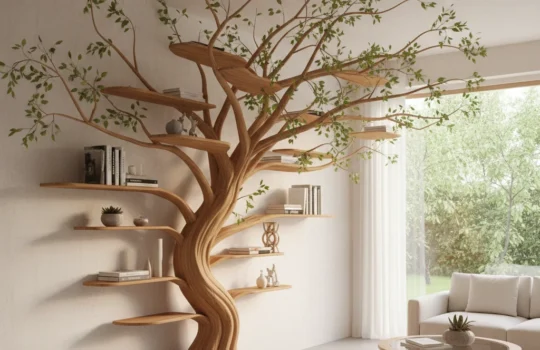
The most popular manifestation of biophilic design is the “Living Wall.” However, creating a lush vertical garden requires more than just a few plastic pots. It requires significant structural support.
A medium-sized ceramic planter filled with wet soil can easily weigh 15 to 25 pounds. When you curate a shelf with three or four of these, plus decorative stones and books, you are testing the limits of standard shelving. This is why thick floating shelves are the 2026 standard for biophilic enthusiasts.
-
Heavy-Duty Invisible Brackets: Modern 2026 shelving systems utilize industrial-grade, cold-rolled steel brackets that disappear into the wood. When mounted into wall studs, these shelves can support up to 100 pounds, providing the “structural trust” needed to display heavy, water-filled planters.
-
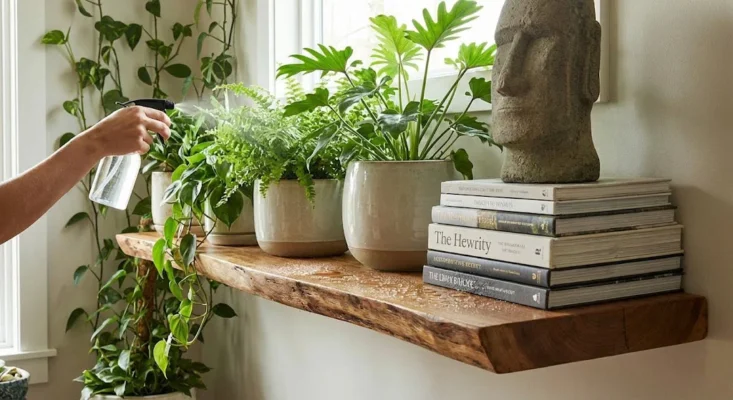
Moisture-Resistant Finishes: Because indoor forests require misting and watering, today’s premium wooden shelves are treated with hydrophobic ceramic oils. These finishes protect the wood from “cup rings” and water stains while allowing the timber to remain breathable and natural to the touch.
Layering the Vertical Forest: A Styling Guide
To achieve a true “forest” feel, one must think in layers, mimicking the structure of a natural ecosystem:
-
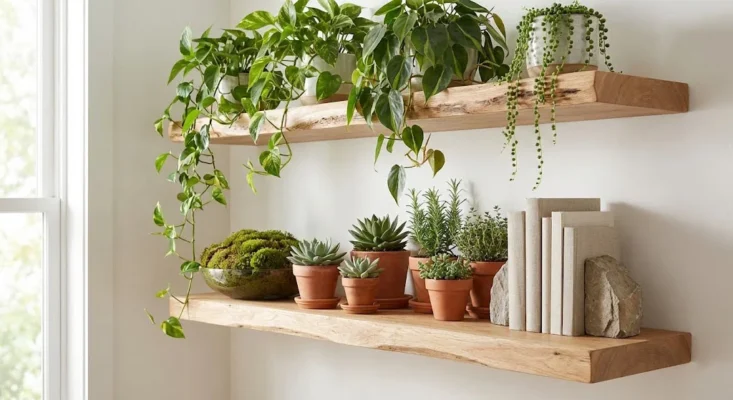
The Canopy (Top Shelves): Use high-mounted thick shelves for trailing plants like Pothos, Philodendron, or String of Pearls. Allow the vines to drape over the thick wooden edge, softening the lines of the room and mimicking the way light filters through a forest ceiling.
-
The Understory (Eye-Level): This is the “tactile zone.” Place shelves at a height where you can easily reach the plants. Use this space for aromatic herbs, moss bowls, or succulents with interesting textures. The thick wood acts as a sturdy frame, turning each plant into a piece of living art.
-
The Soil Element: Balance the greenery with other natural materials. Mix your wooden shelves with terracotta pots, stone bookends, and linen textures to complete the elemental palette of earth, wood, and air.
2026 Innovation: Integrated Grow Lighting
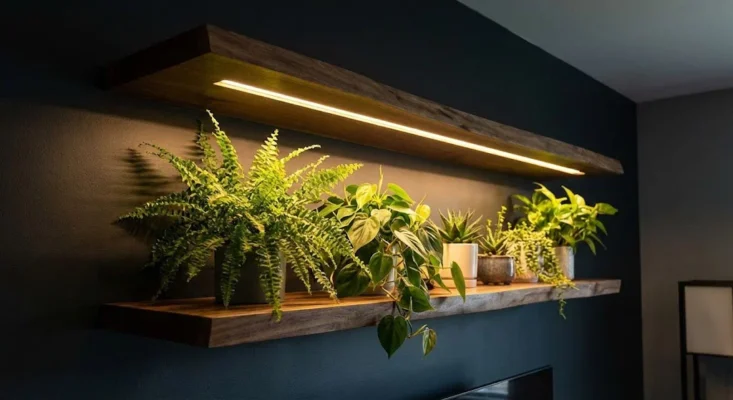
The biggest challenge for indoor forests has always been light. In 2026, technology has caught up with design. High-end floating shelves now frequently feature recessed, full-spectrum LED strips carved directly into the underside of the wood.
This “invisible tech” serves two purposes:
-
Plant Health: It provides the specific light wavelengths needed for photosynthesis, allowing plants to thrive in dark apartments or windowless corners.
-
Ambiance: The light illuminates the shelf below, casting a warm, dappled glow through the leaves of the plants, mimicking the “Golden Hour” in a forest.
Mental Clarity and the “Breathe” Zone
Beyond the aesthetics, the combination of solid wood and living plants creates a “Breathe Zone.” Plants act as natural air purifiers, while the solid wood maintains a stable humidity level in the room by absorbing and releasing moisture.
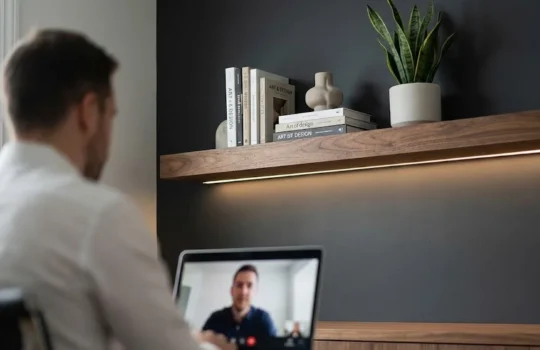
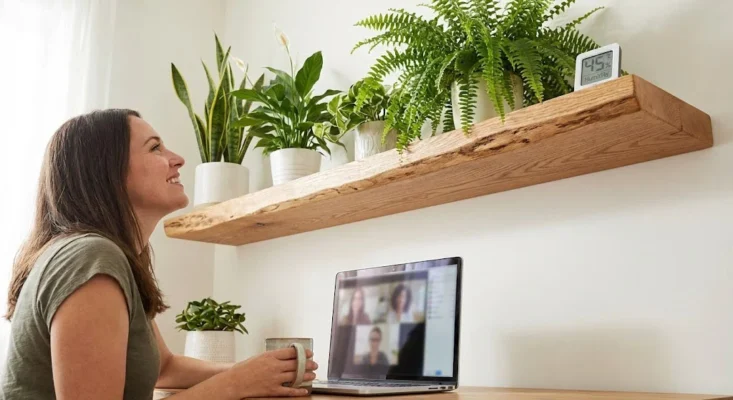
For the millions of Americans working from home in 2026, a biophilic living room is a productivity tool. “Zoom fatigue” is significantly reduced when your eyes have a natural, textured surface like a thick oak shelf, to rest upon during breaks. It provides a visual “reset” that digital screens cannot offer.
A Home That Lives With You
Investing in thick floating wooden shelves is the first step in transitioning from a “decorated” home to a “living” home. By choosing materials that age gracefully and support the weight of real nature, you are creating a space that breathes, evolves, and heals.
In 2026, luxury isn’t about how much you own; it’s about how closely you can live to the rhythm of the natural world. A solid wood shelf isn’t just a piece of furniture—it is the foundation of your personal indoor forest.